Tariffs Could Make Your Car Insurance Even More Expensive in 2026
Tariffs Could Make Your Car Insurance Even More Expensive in 2026
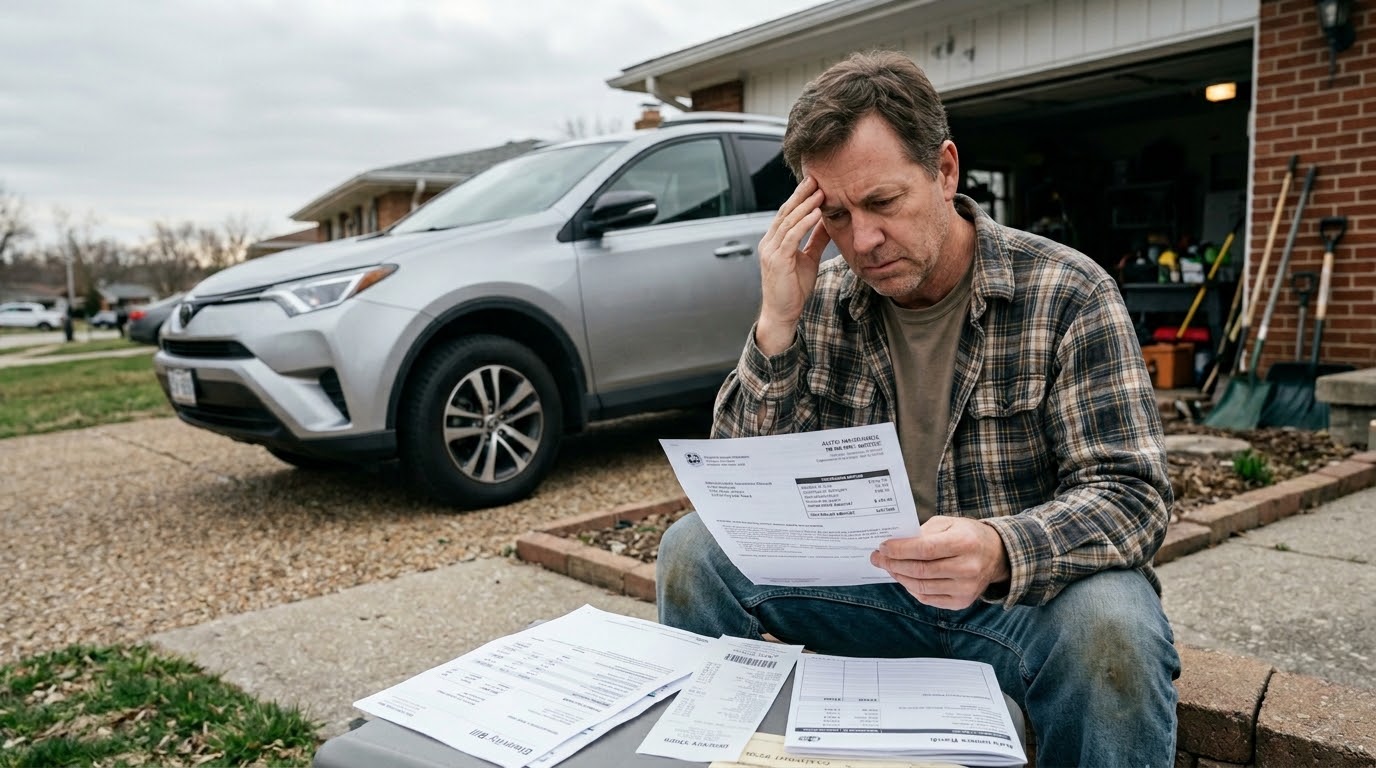
You open your mailbox — or maybe a notification pops up on your phone — and there it is. Your car insurance renewal. You already know the number before you even click on it.
It's higher. Again.
But here's what's maddening: nothing changed on your end. No accidents. No tickets. No new car. You didn't even move to a new neighborhood. So why is this bill creeping up like it has a mind of its own?
The answer has nothing to do with you. It has everything to do with tariffs — and most drivers have no idea this connection even exists.
The Invisible Hand Raising Your Premium
When people hear the word "tariff," they think about trade wars, politicians arguing on cable news, or maybe the price of a new iPhone.
They don't think about their car insurance bill.
But they should.
Since April 2025, a 10% universal tariff has been applied to most imported goods, with steeper tariffs of 25% targeting imported vehicles, auto parts, steel, and aluminum. At first glance, that sounds like a problem for automakers and importers — not everyday drivers trying to budget their monthly expenses.
Here's the thing: it absolutely is your problem.
When the cost of fixing a car goes up, insurance companies pay more on every single claim they process. And insurance companies, like any business, don't absorb those costs. They pass them on. To you. At renewal time.
The insurance industry typically takes 12 to 18 months to fully adjust to new cost structures — which means the full impact of current tariffs may continue developing through 2026.
That timeline matters. It means many drivers haven't felt the worst of it yet.
The Numbers That Should Alarm You
Let's talk concrete figures, because the data here is genuinely sobering.
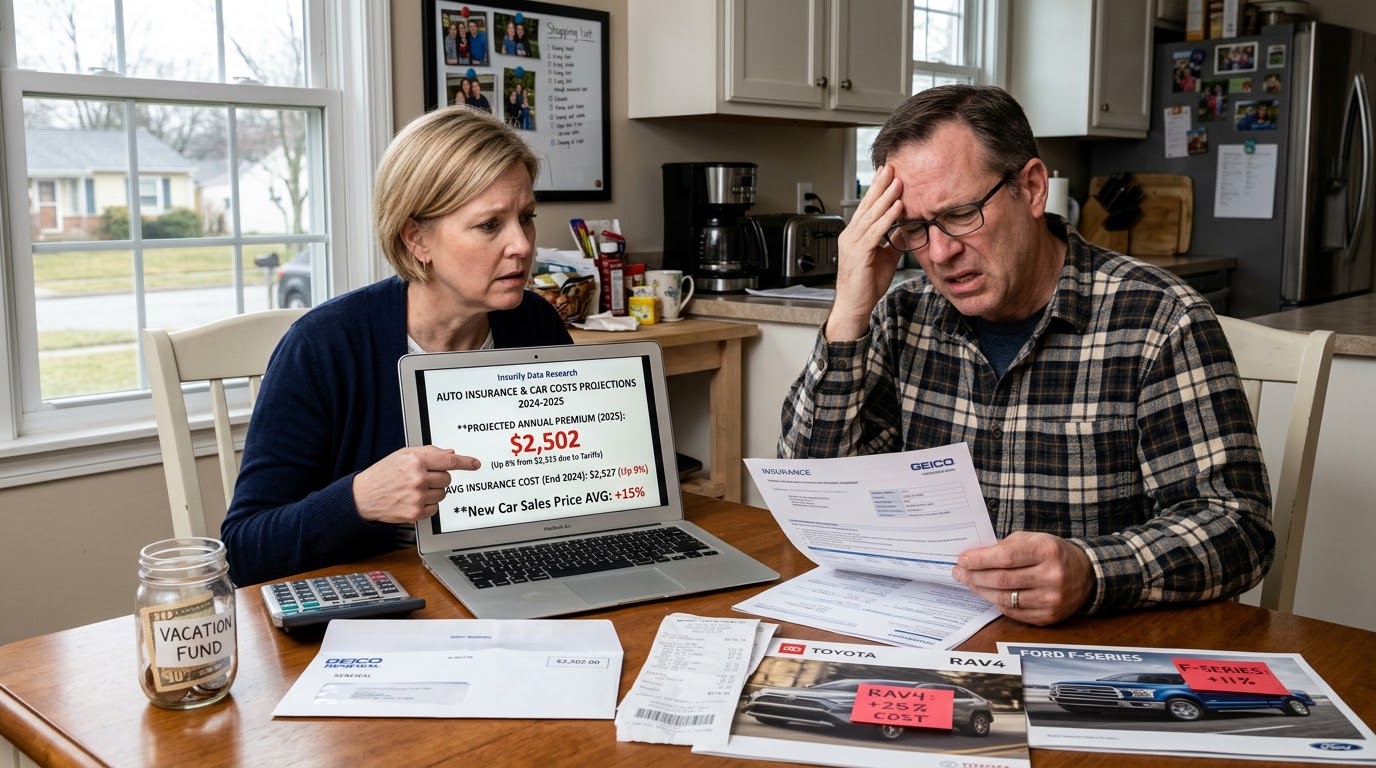
Insurify data scientists project that insurance costs for the average vehicle could rise 9% by the end of the year, up from 5% before tariffs — bringing the projected annual cost to $2,527.
The 25% tariffs on cars and auto parts from Canada and Mexico will increase premiums by an average of 8% by the end of 2025, going from $2,313 a year up to $2,502, according to a study from insurance comparison platform Insurify.
That's not a rounding error. That's real money — the kind that cuts into grocery budgets, vacation plans, and savings goals.
Meanwhile, the sales price of the average new car could rise about 15% because of tariffs. Of the three most popular new car models in the U.S., the Toyota RAV4 would see the highest projected cost increase at 25%, followed by the Chevrolet Silverado at 12% and the Ford F-Series at 11%.
The more expensive the car to replace, the more expensive it becomes to insure. It's a compounding effect, and it doesn't stop at the dealership.
Why Car Insurance Pays the Price for Trade Policy
Stop for a second and think about what happens after a car accident.
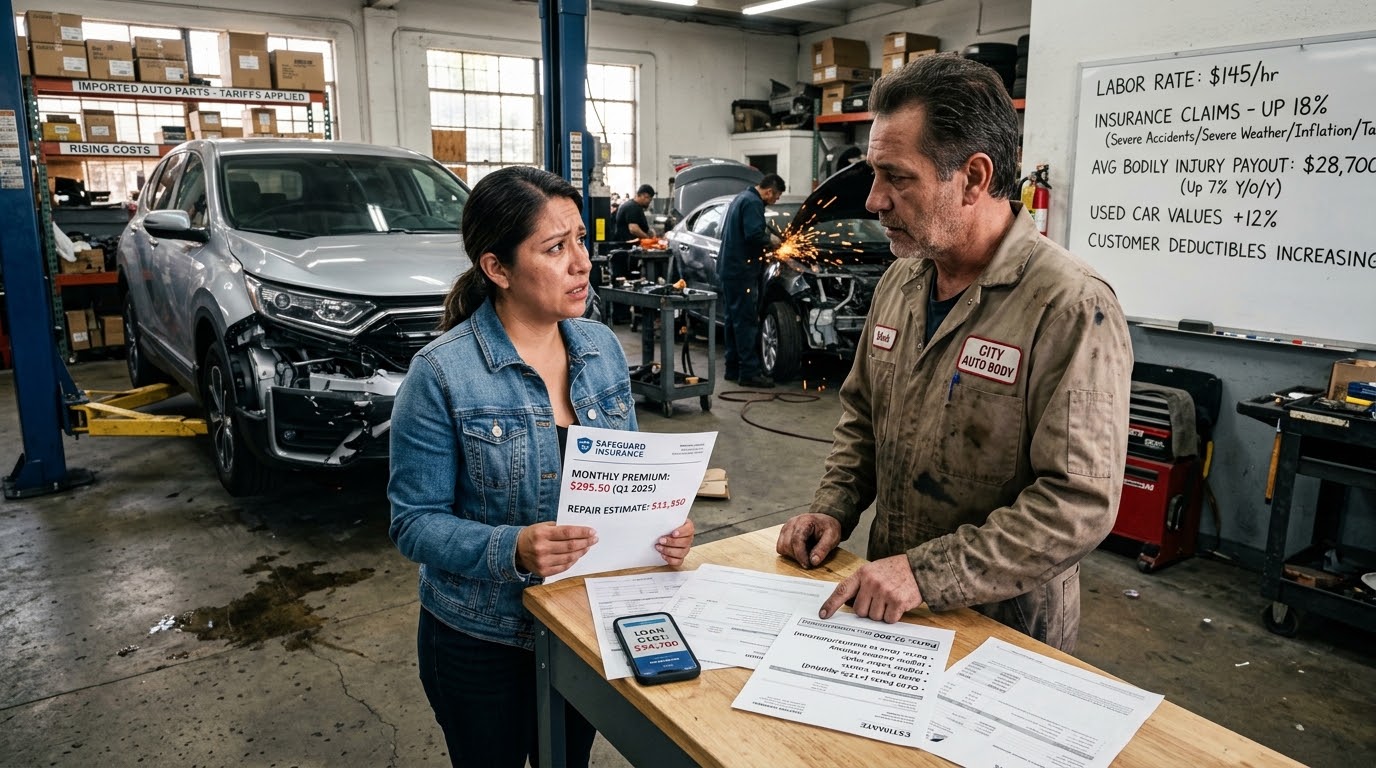
The repair shop needs parts. Bumpers, sensors, cameras, headlights, airbags. Most of those parts don't come from down the street. About six out of every ten auto replacement parts used in U.S. repair shops are imported from Mexico, Canada, and China.
So when a 25% tariff lands on those imports, the math is simple and brutal: every fender bender, every cracked windshield, every totaled vehicle now costs significantly more to process as a claim.
With higher claim costs, insurance companies will have to raise rates to offset the financial losses — and customers can expect to see rate increases at their next renewal.
The Center for Automotive Research estimates a total cost impact of $107.7 billion across all automakers in the U.S. due to tariffs. That's not an abstract figure. It's the economic pressure that eventually shows up as a line item on your insurance bill.
Not All Drivers Are Equal — Where You Live Matters Enormously
Here's something most people don't realize: tariff-driven premium hikes won't hit every state the same way.
Some states are more likely to see a higher insurance rate increase from tariffs — Minnesota could see a 16% increase in insurance rates, while Rhode Island has the second-largest projected increase at 15%.
Tariff-driven price hikes are set to reshape the auto insurance landscape, hitting hardest in high-premium, import-reliant states like Nevada, Florida, and California. Lower-income and multicar households will likely feel the strain most.
For Florida alone, after rates dropped 8% in the first half of the year, projections suggest the state could reverse course — facing the biggest cost increase, pushing the state's average from $2,912 to $3,107.
Geography isn't destiny, but in this case, it certainly shapes your exposure.
States like California and New York require approval before insurers can raise rates — that may delay increases, but it won't block them entirely if repair costs keep spiking.
A Market Already Under Pressure
Let's be clear about something important: tariffs didn't create this problem from nothing. They landed on a market that was already strained.
Even before President Donald Trump's tariffs were announced, insurance premiums were at an all-time high, driven by an increase in severe accidents, rising costs for parts and labor, and broader inflation.
Average third-party bodily injury payouts reached $28,700 per injured party in the first quarter of 2025 — a figure that has been increasing roughly 7% every year.
Tariffs didn't start the fire. But they poured fuel on it.
Car insurance rates have risen because insurers are paying increasingly more for accident claims. Factors like higher repair costs, severe weather, tariffs, and higher used car values are all contributing to the upward pressure.
Meanwhile, consumers are increasingly seeking higher deductibles to lower their premium payments — and record levels of auto loan debt, postponed large purchases, and repossessions are evidence of the broader economic pressure households are facing.
People are making hard choices. And those choices are reshaping the insurance market too.
What You Can Actually Do About It
You can't repeal tariffs. You can't move the global supply chain. But you're not powerless here.
The single most effective thing most drivers can do right now is shop around. Seriously. Loyalty to your current insurer is costing many people money they don't need to spend.
As insurance costs rise, consumers aren't just absorbing the hit — they're shopping for better rates, tweaking coverage, putting off car purchases, and cutting other expenses to compensate.
Here are practical steps worth taking before your next renewal:
Compare at least three quotes from different insurers. Prices can vary by hundreds of dollars for identical coverage.
Ask about bundling discounts. Combining home and auto insurance often unlocks meaningful savings.
Review your coverage limits honestly. If you're driving an older vehicle, carrying full collision coverage may no longer make financial sense.
Raise your deductible if you have emergency savings to back it up. Going from a $500 to a $1,000 deductible can reduce your premium noticeably.
Ask about usage-based or telematics programs. If you're a safe, low-mileage driver, these programs can reward you with real discounts.
Experts anticipate statewide insurance premium increases of 1% to 4%, with the chance of larger increases once insurers fully price in the impact of tariffs on auto parts. That window — before the full impact hits — is the right time to act.
The Domino Effect No One Talks About
There's a ripple effect here that goes beyond just your premium number.
When insurance gets more expensive, some drivers quietly downgrade their coverage. They drop comprehensive. They raise deductibles to uncomfortable levels. Some drop coverage entirely, which increases the risk for every other driver on the road.
According to U.S. Treasury data, auto insurance in 2023 made up 35.8% of the entire property and casualty market — meaning even small pricing shifts carry enormous ripple effects across the economy.
This isn't just a personal finance story. It's a systemic one.
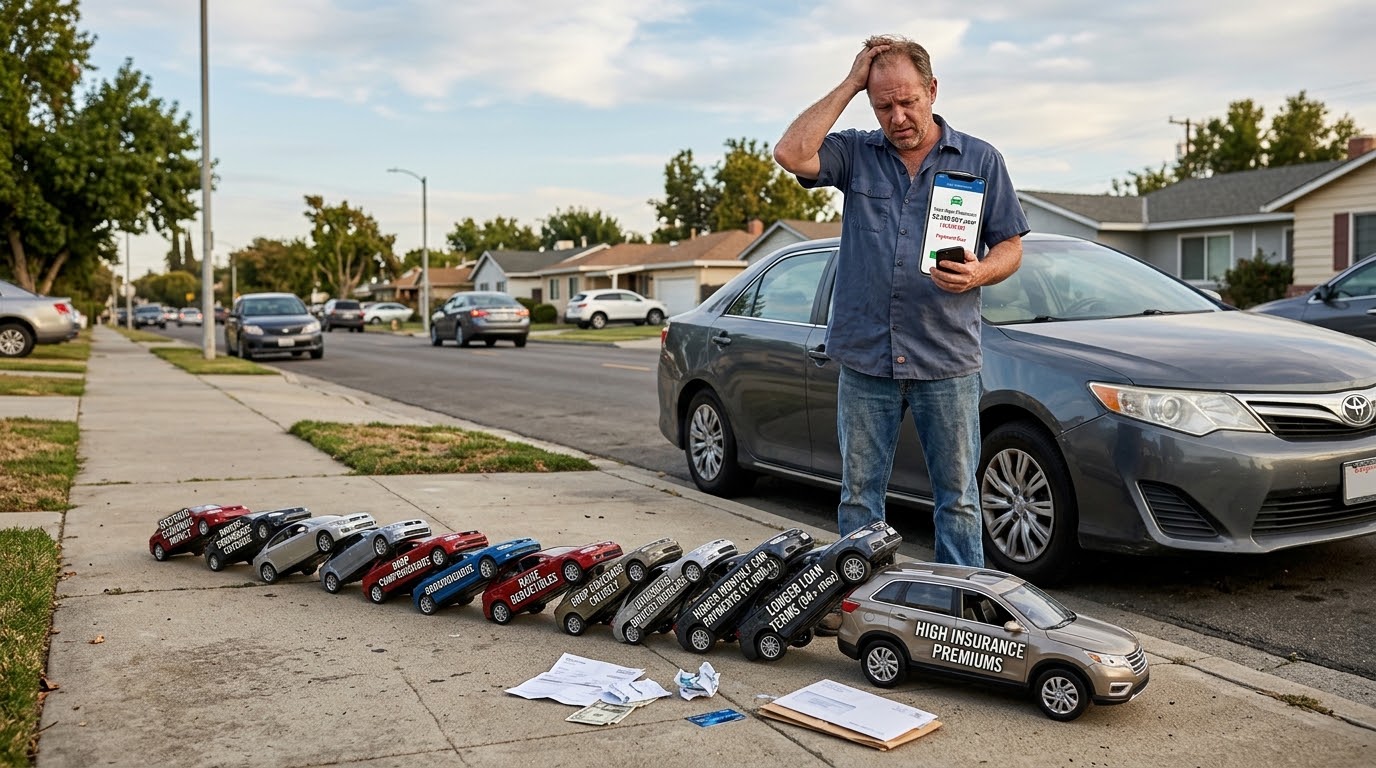
Longer loan terms, buyers paying $1,000 or more a month for a vehicle, and higher insurance costs are pushing new car ownership toward the limits of affordability for many American households.
For families already stretched thin, a premium increase of even $200 to $300 a year isn't trivial. It's a car payment. It's a utility bill. It's a month of groceries.
The Outlook: Better Than 2023, But Still Uncertain
To be fair, the picture for 2026 isn't entirely bleak.
After years of rising prices, car insurance became more affordable for many Americans in 2025, with the national average cost of full coverage insurance falling 6%.
Insurify predicts car insurance costs will likely increase in 35 states and fall in 15, with the predicted nationwide 1% increase bringing the national annual average from $2,144 to $2,158.
That's relatively modest. The concern, however, is that the full tariff impact hasn't yet worked its way through the system.
Insurance companies used elevated premiums to improve their financial footing, helping the industry absorb some tariff-driven costs without immediately raising prices — but the full effects of tariffs on repair costs have not yet hit.
Think of it like a delayed fuse. The explosion hasn't fully happened yet.
Craig Martin, executive managing director of J.D. Power's Global Insurance Intelligence team, expects "stable or potentially moderate auto premium increases in 2026" — but acknowledges the wildcard that tariff policy represents.
Conclusion: The Bill You Didn't Vote For
Here's the honest truth no one wants to say out loud: you are paying for trade policy every time your car insurance renews.
You didn't choose these tariffs. You didn't negotiate them. You didn't benefit from them. But through higher repair costs, more expensive parts, and insurers recalibrating their risk math, the cost finds its way to your doorstep anyway.
That's not a political statement. It's just how the economics work.
What you can control is how prepared you are. Understanding why your premium is rising gives you leverage — to shop smarter, adjust your coverage more strategically, and stop assuming that your renewal notice is non-negotiable.
It almost always is negotiable. Or at minimum, replaceable with a better deal somewhere else.
Drivers can expect rate increases starting mid-2025, with full effects playing out into 2026. These changes highlight the need for transparency and proactive steps like shopping around and adjusting coverage.
The tariffs are here. The higher repair costs are coming. Your next renewal will reflect both.
The only question is whether you'll be ready for it.

Comments
Post a Comment
Silahkan anda berkomentar dengan baik, jangan melakukan Spam, jangan menyisipkan link aktif,
terima kasih.