EV Owners Are Furious: Electric Car Insurance Costs Are Out of Control in 2026
EV Owners Are Furious: Electric Car Insurance Costs Are Out of Control in 2026
By Editorial Team | May 23, 2026 | Reading time: ~10 minutes
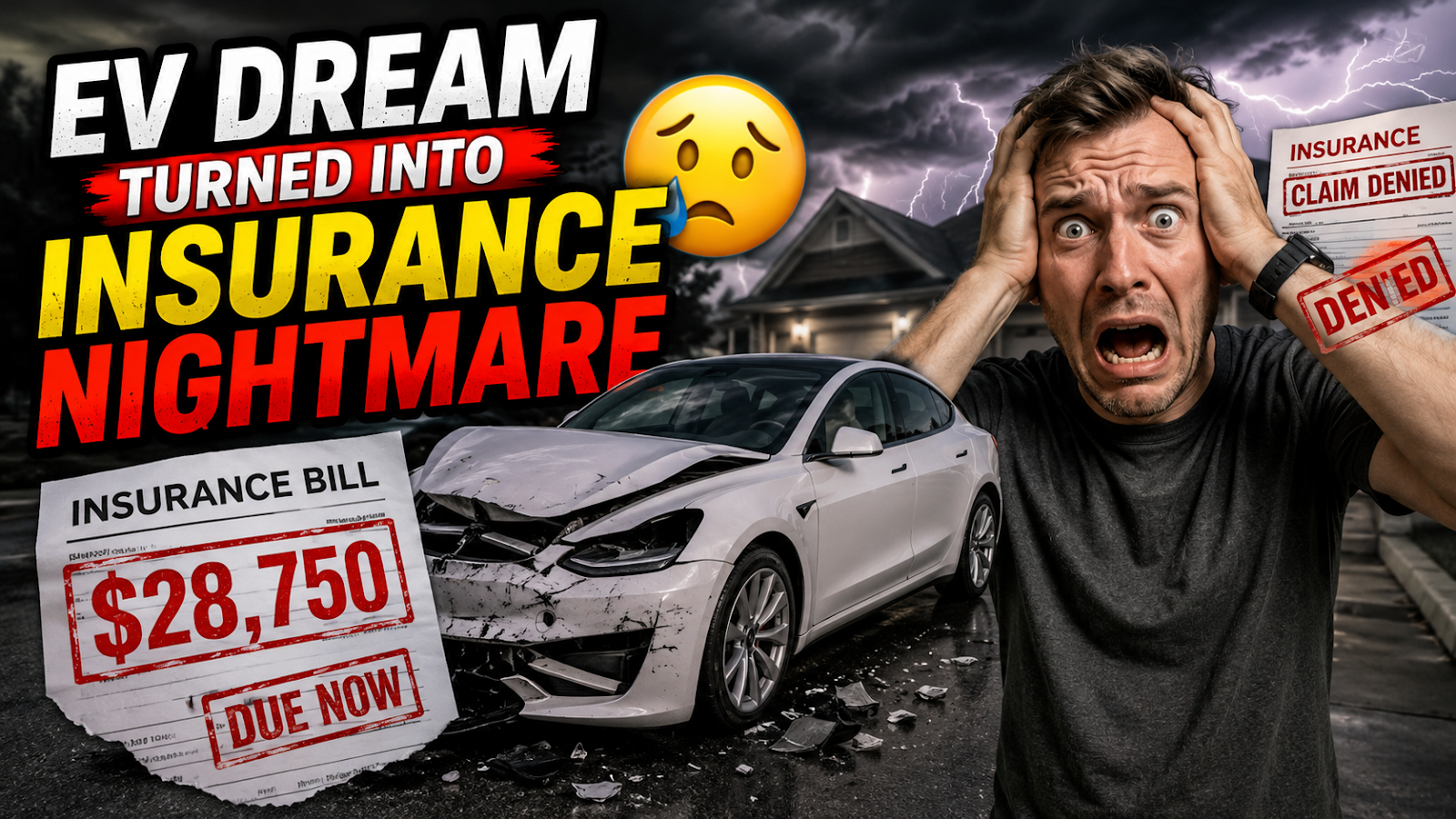
You just bought your dream electric car. Maybe a Tesla Model 3. Maybe a Hyundai Ioniq 6. You were thrilled because your gas bill was about to disappear forever. You thought this was the smartest financial decision you had ever made in your life.
Then the insurance bill arrived. $315 a month. Nearly $3,800 a year. For a car that was supposed to save you money. Suddenly, every calculation you made on that spreadsheet comes crashing down.
This Is Not Just Complaining — This Is a Real Crisis
On Reddit's r/electricvehicles, posts about exploding insurance premiums consistently rack up thousands of upvotes. In EV Facebook groups, the question "is your insurance premium also going insane?" almost always ends with hundreds of angry comments.
This is not just rich people whining about expensive toys. This is a systemic problem hitting hundreds of thousands of EV owners across the globe — from Tesla drivers in California to MG4 owners in the UK. And unfortunately, in 2026, this problem is far from fully resolved.
What EV Insurance Actually Costs in 2026
Let's talk numbers. Because numbers don't lie.
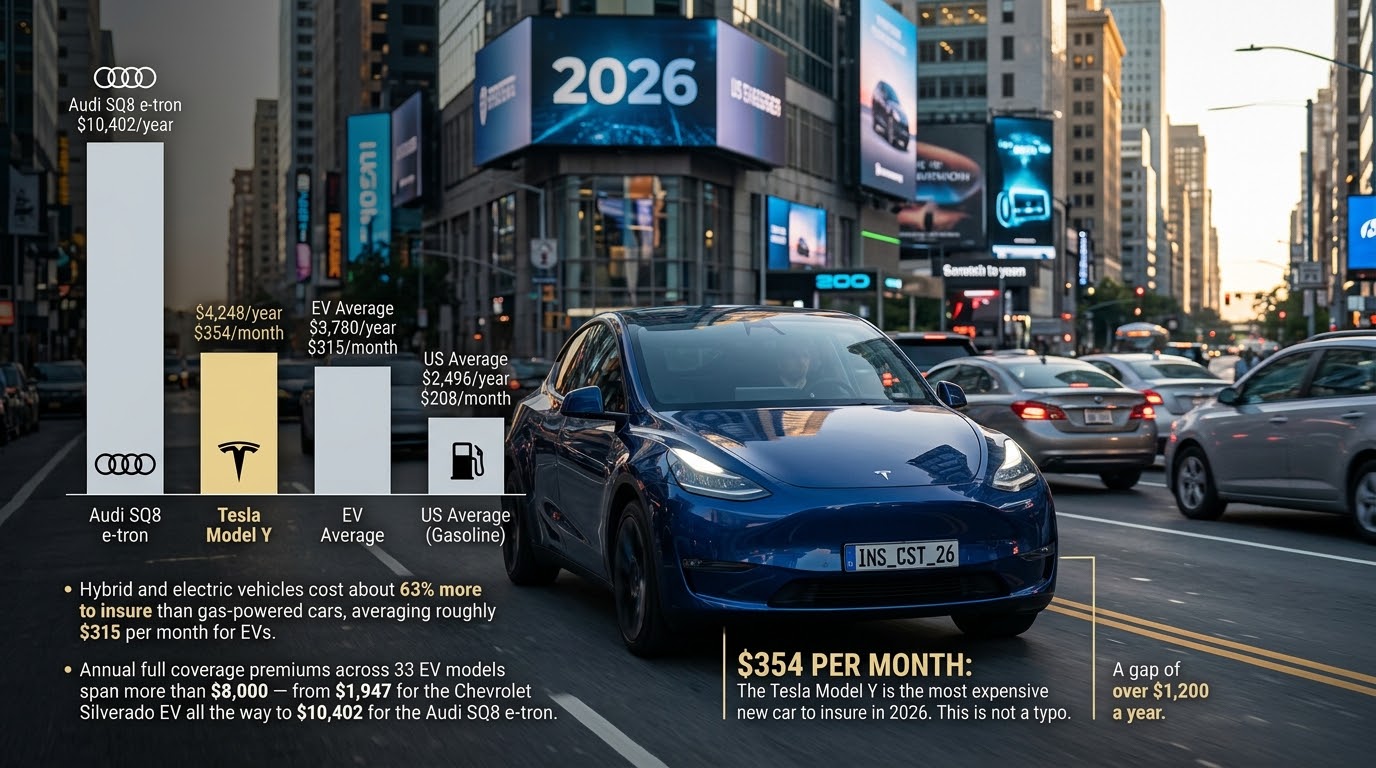
Hybrid and electric vehicles cost about 63% more to insure than gas-powered cars, averaging roughly $315 per month for EVs.
Compare that to what the average driver pays. The average cost of full coverage car insurance in the U.S. is $208 per month, or about $2,496 per year.
That's a gap of over $1,200 a year. Simply because your car doesn't burn gasoline.
Annual full coverage premiums across 33 EV models span more than $8,000 — from $1,947 for the Chevrolet Silverado EV all the way to $10,402 for the Audi SQ8 e-tron.
And even the mainstream models sting. The Tesla Model Y — now one of the best-selling cars on the planet — is the most expensive new car to insure in 2026, with full coverage averaging $354 per month.
That is not a typo. Three hundred and fifty-four dollars. Every single month.
Why Is EV Insurance So Expensive? The Real Story
A lot of people assume this is just insurance companies being greedy. Cashing in on the EV trend. Squeezing early adopters because they can.
The reality is more complicated — and in some ways, more alarming.
1. Repair Costs That Defy All Logic
This is the root of everything.
The average repair cost for a traditional vehicle is $4,437. For EVs, that number jumps 49% higher to $6,618, due to their advanced technology and the specialized handling required for their electric powertrains.
Forty-nine percent more expensive. Think about that for a second. You bump into a shopping cart in a parking lot. For a regular car, it's a straightforward fix. For an EV? The process is longer, more complex, and dramatically more expensive.
EVs typically require over 20 days for repairs — 40% more time than non-EVs, according to CCC Intelligent Solutions.
More days in the shop means more days in a rental car. And that rental cost? It goes straight into the insurance claim too.
2. Too Few Shops That Can Actually Fix EVs
This is a brutal supply and demand problem.
EV repairs require technicians trained on battery systems, high-voltage components, and advanced driver assistance technology. Very few shops have this expertise — which limits competition and drives labor rates higher.
When your repair options are limited, you have zero negotiating power. The shops know it. And they price accordingly.
3. The Battery — A Component That Costs as Much as a Used Car
This is what insurers fear most.
The battery is the most expensive single component in an EV, often representing 30–40% of the vehicle's total value. If damaged in a collision, repair costs skyrocket. Some insurers have had to total EVs over battery damage alone.
Think about that. A $45,000 car with a battery worth $15,000 to $18,000. One bad accident — and the whole vehicle gets written off. It's cheaper for the insurer to cut a check for the full car than to replace the battery pack.
More total-loss claims. More massive payouts. Higher premiums for everyone.
4. Sensors and Cameras That Cost a Fortune to Recalibrate
Most EVs include cameras, sensors, and radar components controlling lane keeping, automatic braking, and other safety features. Even a minor collision can require recalibration or full replacement of these systems — adding hundreds or thousands of dollars to a repair bill.
A minor fender bender in a parking garage? For a conventional car, maybe $700. For a fully-loaded EV with advanced driver assistance systems? Easily $3,000 or more just for sensor recalibration. The technology that makes EVs safer to drive is simultaneously making them catastrophically expensive to repair.
The Gap Between EVs and Gas Cars — By the Numbers
Let's lay out the full picture clearly.
Across the U.S. in 2025–2026, multiple studies show EV insurance averaging roughly 20–50% higher than gas vehicles, with annual premiums for many EVs landing in the $3,500–$4,000 range.
In 2026, personal electric car insurance still costs around 15–25% more than petrol or diesel equivalents. That is the conservative estimate. Some models blow well past that ceiling.
Insurance providers include these risk factors when calculating premiums, which often leads to EV insurance costs that are 15–60% higher compared to similarly priced gas vehicles.
Fifteen to sixty percent. That is an enormous range — and it means the specific EV you choose matters enormously for what you'll pay.
Which EVs Cost the Most — and the Least — to Insure?
Not all EVs are equally painful to insure. The differences between models are dramatic.
The Ones That Drain Your Wallet
All five Tesla models exceed $2,800 per year for full coverage, and the Audi SQ8 e-tron reaches $10,402 — the highest rate in the dataset.
The Rivian R1S reaches $477 per month for full coverage — nearly twice the cost of the Chevrolet Equinox EV, which is the cheapest new EV to insure at $226 per month.
Almost double. For vehicles in the same category. That single choice — which EV you buy — can cost or save you thousands of dollars every single year.
The Ones That Are Actually Reasonable
There is good news for some buyers.
The Chevrolet Silverado EV is the cheapest EV to insure at $1,947 per year for full coverage. Most non-luxury EVs from Hyundai, Kia, Toyota, and Volkswagen sit at or below the electric vehicle average.
In general, electric cars made by legacy manufacturers like Chevrolet, Honda, and Ford cost about 49% less to insure than those made by EV-only companies like Tesla.
This is critical information that almost nobody mentions when you're standing in a showroom being dazzled by a touchscreen dashboard.
Meet Jason: When the EV Dream Became a Financial Nightmare
Jason, 36, a software engineer from Denver, Colorado, bought a Tesla Model Y in late 2024. He had run the numbers three times. He was convinced.
"I calculated everything," Jason said. "Two hundred dollars saved on gas each month. Lower maintenance. In four years, the car pays for itself."
Then his insurance agent called.
Full coverage: $412 per month. Nearly double what he had paid for his previous Honda Accord at $221 per month.
"That $191 monthly difference wiped out almost my entire gas savings. I'm still slightly ahead overall — but nowhere near what I imagined. I felt like I had been sold half the story."
Jason is not alone. His story plays out every single day, in cities across America, Europe, and increasingly across Asia. The EV promise is real. But the full financial picture is often hidden in plain sight.
There Is Some Good News — But Not Enough
There is a faint light at the end of this expensive tunnel.
The insurance gap between EVs and gas cars is narrowing. In 2025, EVs cost 23% more to insure than comparable gas vehicles. In 2026, that figure has dropped to 18%.
That trend is genuinely positive. But 18% still feels enormous when it shows up on your monthly statement.
More shops are gaining EV expertise, which should help bring repair costs down over the next few years.
As the EV market matures — better parts availability, more trained technicians, a growing aftermarket ecosystem — premiums should continue declining. In theory.
But "should decline" and "already has declined enough" are very different things. Right now, EV owners are still paying the price for an industry that hasn't fully caught up with the technology it's selling.
What Your Dealer Never Told You
There is one fact that rarely comes up during the car buying process.
EV insurance can cost up to $2,800 more per year than gas car insurance, according to Bankrate — mainly because EV parts and repairs are expensive and require specialized expertise.
Your dealer will talk about fuel savings. They will talk about lower maintenance costs. They will talk about performance, technology, and saving the planet.
What they almost never proactively tell you is how insurance premiums can quietly erase a significant portion of those savings.
Before you sign anything, request insurance quotes first. Not after. Not during. Before. Treat it as a non-negotiable step in the buying process, as important as the test drive itself.
7 Practical Ways to Lower Your EV Insurance Premium Right Now
Being stuck with a high premium does not mean you are powerless.
First, compare quotes from at least five different insurers. Prices vary wildly between companies for the exact same vehicle. Some insurers offer green vehicle or EV-specific discounts that most buyers never think to ask about. Never accept the first quote you receive.
Second, enroll in a telematics program. Many insurers now offer meaningful discounts if you allow them to monitor your driving habits through an app. Safe, smooth drivers — which many EV owners naturally are — can unlock significant reductions.
Third, raise your deductible. Choosing a higher deductible, from $500 to $1,000 for example, can noticeably lower your monthly premium. Just make sure you have that amount sitting in an emergency fund.
Fourth, bundle your policies. Almost every major insurer offers discounts when you combine auto insurance with home, renters, or life insurance under the same provider.
Fifth, choose your EV model strategically. EVs from legacy automakers like Chevrolet, Honda, and Ford cost about 49% less to insure than those from EV-only manufacturers. Your model choice is the single biggest insurance decision you will make.
Sixth, keep your driving record spotless. No accidents, no violations. A clean record unlocks good driver discounts that can make a real dent in your annual premium.
Seventh, ask about defensive driving courses. Many insurers reward drivers who complete certified safe driving programs with additional discounts. It costs a weekend. It can save you hundreds of dollars a year.
Is Owning an EV Still Worth It Financially?
The honest answer: it depends.
On average, EVs cost 30–50% less to maintain than comparable gas cars. But collision repairs can run about 20% higher, and insurance is often 10–25% more expensive.
So the day-to-day savings are real. Fuel costs drop dramatically. Routine maintenance is genuinely cheaper. But the total cost of ownership calculation is far more nuanced than the cheerful marketing suggests.
If you buy a non-luxury EV from a traditional automaker, drive carefully, and aggressively shop your insurance — owning an EV is still a financially sound decision for most people.
But if you walk into a Tesla showroom, fall in love, sign the papers, and only then check insurance costs — you may be in for a shock that no amount of fuel savings will fully cushion.
What Needs to Change — and Who Is Responsible
Insurance companies are not the villain in this story.
They are simply responding to the claims data in front of them. And that data clearly shows EVs are more expensive to repair. Until the repair ecosystem truly matures — more certified shops, more trained technicians, a robust aftermarket parts supply — premiums will logically remain elevated.
What urgently needs to change is transparency.
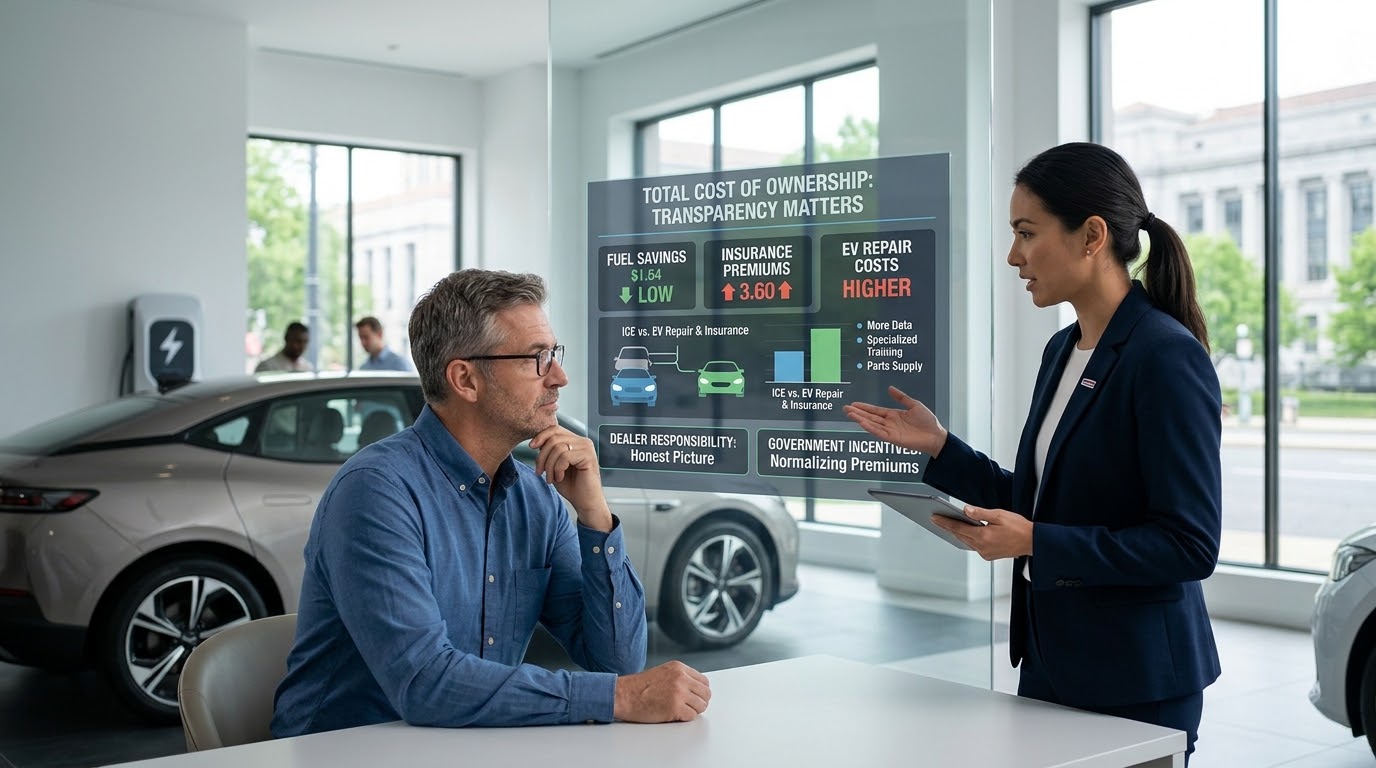
EV manufacturers and dealers need to stop selling half the story. Insurance costs must become a standard part of every sales conversation. Consumers deserve a complete, honest picture of total ownership costs — not just the fuel savings number that sounds so compelling in the moment.
Governments have a role too. Some countries are already exploring EV-specific insurance incentives, or pushing regulations that encourage more shops to gain EV certification. These steps, if implemented broadly, could meaningfully accelerate the normalization of EV insurance premiums.
The Bottom Line: Buy Smart, Not Just Green
EVs are not a scam. The transition to electric vehicles is real, necessary, and ultimately beneficial — for your wallet over the long run and for the planet right now.
But in 2026, the reality is this: insurance remains one of the sharpest financial thorns in the EV ownership experience.
Paying $315 a month for EV insurance compared to $208 for a conventional car is not a gap you can ignore. It is a number that belongs in every honest financial calculation before you commit.
The good news is that the trend is moving in the right direction. The insurance gap is shrinking — from 23% in 2025 down to 18% in 2026. The ecosystem is catching up. The pain is real but it is not permanent.
Until then, do one thing before you fall in love with any EV in a showroom.
Get the insurance quote first. Compare at least five. Run the complete numbers with your eyes wide open.
Because the best EV for you is not just the one you love most. It is the one that makes complete financial sense for your actual life.
Buy smart. Drive green. And never let anyone sell you half the story again.
Sources & References:
- MoneyGeek – Electric Vehicle Insurance Costs 2026
- ValuePenguin – State of Auto Insurance 2026
- The Zebra – Hybrid and Electric Vehicle Insurance Rates
- Recharged – Why Do EVs Cost More to Insure in 2026
- Truvo Insure – Electric Vehicle Insurance Costs in 2026
- Apex Insurance Inc – Electric Car Insurance 2026 Guide
This article is intended for informational and educational purposes. Insurance premium figures may vary based on location, driver profile, vehicle model, and insurer. Always consult directly with a licensed insurance agent before making any coverage decisions.


Comments
Post a Comment
Silahkan anda berkomentar dengan baik, jangan melakukan Spam, jangan menyisipkan link aktif,
terima kasih.